Renting vs. Buying a Second Home in Jupiter, Florida Guide
For Jupiter second-home buyers, the choice between seasonal renting and ownership comes down to three factors: how many months per year you plan to use the property, whether community membership matters to you, and your five-year horizon. Here is how each path works in Jupiter's $1M-plus market, and how the lifestyle each one delivers differs in ways that go well beyond the financials.
What Jupiter's Lifestyle Actually Delivers Year-Round
Jupiter is not a one-season destination. That distinction shapes every part of the renting-versus-owning conversation: a property that serves you well from January through April is a very different commitment from one that anchors your lifestyle across multiple seasons.
Winter and early spring bring the most concentrated social energy. The Intracoastal fills with boats, golf and club community living in Northern Palm Beach County runs full programming, and dining rooms in private communities stay busy through April. Families with school-age children, snowbirds from the Northeast and Midwest, and executives building a warm-weather base all arrive in the same window, running a full social calendar across private clubs from January through April.
Summer and early fall shift the pace. The crowds thin, the afternoons are warm and humid, and life becomes quieter and more local. For year-round second-home owners, this slower season has its own appeal: Uncrowded beaches, easier reservations, and a sense of the place returning to itself. Coastal beach living along Jupiter's shoreline carries a different character in these months, one that many owners come to value as much as the peak-season energy.
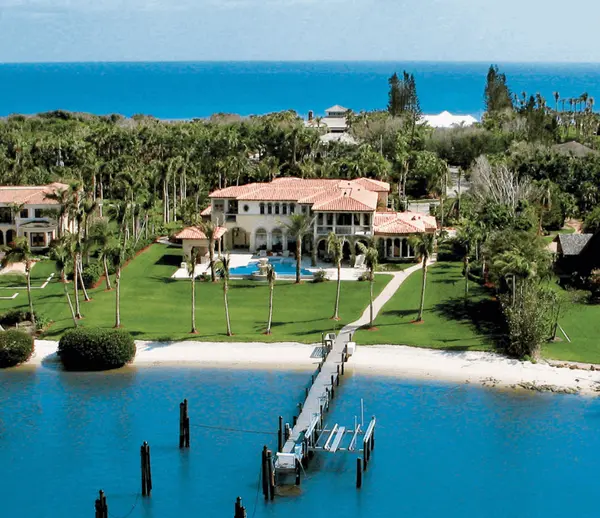
The range of lifestyle anchors here is part of what makes ownership in Jupiter feel sustainable over time. Waterfront and boating communities like Admirals Cove and Jonathan's Landing put the Intracoastal at your back door. Golf and club communities including Jupiter Country Club and Bears Club offer structured social calendars, championship courses, and amenity programs that run year-round. Jupiter Farms provides a different kind of open space: larger acreage, more privacy, and a quieter daily rhythm. When a second home can genuinely serve multiple seasons and multiple ways of living, the comparison with seasonal renting starts to look different.
The Case for Seasonal Renting in Jupiter
Seasonal renting makes sense when flexibility matters more than permanence. For buyers who are still learning which part of Jupiter suits them, or who visit for two to three months each year, renting first allows you to test a community's social culture, its orientation to the water, and even which direction the morning light comes from, before committing to ownership.
Jupiter's luxury rental market is well-developed, particularly in the waterfront and golf community segments. Single-family homes in communities like Jonathan's Landing have listed at approximately $15,500 per month during the winter season, based on aggregated residential listing data for the 2025–2026 season. In Admirals Cove, seasonal luxury rentals have reached $25,000 per month or higher at the upper end of the market during that same period. Condos and townhomes in established communities generally fall between $5,000 and $9,000 per month during peak season. The executive rentals available across Jupiter's private communities reflect the full range of property types in this segment.
The financial structure is straightforward. You pay a monthly rate without the carrying costs of ownership: No property insurance, no HOA assessments, no maintenance reserves. For someone spending three months in Jupiter each winter, that simplicity has real value. The trade-off is that you build no equity, and at Jupiter's price levels, even three months of premium seasonal rent is a meaningful outlay with nothing long-term returned on it.
There is also a scarcity reality worth understanding early. The most desirable seasonal rentals in Jupiter's private communities tend to be committed well before peak season begins. If a specific community or waterfront setting is important to your experience, starting the search in late summer or early fall gives you access to the strongest inventory. Waiting until November typically means choosing from what remains after the most sought-after properties have already been placed.
The Case for Buying a Second Home in Jupiter
Ownership in Jupiter's $1M-plus market is a fundamentally different relationship with the place. Rather than arriving to someone else's property, you arrive to yours: Configured to your preferences, stocked as you left it, and available exactly when you want it without lease negotiations, availability uncertainty, or coordinating around someone else's booking calendar.
The Lifestyle of Belonging
The most important distinction between seasonal renting and ownership in Jupiter is not financial. It is social. Many of Jupiter's premier private communities tie club membership directly to property ownership. At Admirals Cove, Bears Club, Frenchman's Creek, and comparable communities, the club relationship, the social calendar, and the sense of belonging to a specific place are not things a seasonal tenant can replicate. Buying means belonging. Renting means visiting. For buyers to whom continuity of community matters, this is often the deciding factor before any financial comparison is even made.
The Financial Dimensions
You need to know Florida's tax environment as a meaningful part of the ownership equation for high-income buyers. Buying a second home in Jupiter Florida imposes no state income tax, which benefits anyone splitting time between states regardless of residency classification.
Second-home owners do not qualify for Florida's homestead exemption. However, non-homestead residential property carries a 10% annual cap on assessed-value increases for non-school taxes, as confirmed by the Palm Beach County Property Appraiser. That cap limits how quickly property tax obligations can rise in an appreciating market and provides a degree of year-over-year predictability that buyers from higher-tax states often find significant. A proposed constitutional amendment on the November 2026 ballot would reduce this cap to 5% for non-homestead properties starting in 2027, pending voter approval.
Based on reported residential sales data compiled through June 2026, Jupiter's townwide median single-family sale price stood at approximately $1,040,000. In Admirals Cove, Jonathan's Landing, Bears Club, and the waterfront corridors, transaction prices in the $2M to $8M range reflect what the market has supported consistently. Inventory at the upper tiers, while broader than in prior years, remains limited relative to demand, with cash buyers active throughout the luxury segment.
Ownership Costs Worth Modeling
Florida's insurance environment, particularly for coastal and near-coastal properties, requires a hazard and wind policy and, where lenders require it, a separate flood policy. These costs have risen in recent years and now represent a significant part of the monthly ownership calculation.
HOA fees in fully amenitized club communities can also represent a meaningful ongoing commitment. These are not reasons to avoid ownership. They are numbers to model carefully before committing, and doing so with accurate current quotes from insurers and community management offices is the right starting point.
Offsetting Costs Through Selective Seasonal Rental
Second-home owners who want to recover carrying costs have a legitimate path through renting the property when it is not in use. In Florida, renting an entire unit more than three times in a calendar year for stays under 30 days requires a vacation rental license from the Florida Department of Business and Professional Regulation (DBPR).
On the tax side, Palm Beach County's short-term rental stack totals 12.5% of taxable receipts: 6.5% Florida state sales tax (which in Palm Beach County includes the county's school capital outlay surtax) plus 6% Palm Beach County Tourist Development Tax on rentals of six months or less. Hosts must also maintain a registered TDT account and hold a current Short-Term Rental Business Tax Receipt.
Community-level rules operate independently of public law. HOA documents and condo bylaws in many Jupiter communities impose additional requirements or restrictions, and those governing documents need to be reviewed before purchasing with rental income as a goal.
Comparing the Two Paths
The three factors that most often determine the right path are annual use (months per year), desire for community membership, and a five-year horizon. They point in different directions depending on your situation, and a side-by-side comparison makes those trade-offs clearer.
Several of the most deliberate second-home buyers in Jupiter's luxury market spent one or two seasons renting within a community before purchasing within it. That sequencing is not a compromise. It is how considered buyers approach markets where the lifestyle and the community are as important as the property itself.
| Factor | Seasonal Renting | Second-Home Ownership |
|---|---|---|
| Annual use | Best for 2–3 months per year | Stronger case at 4+ months per year |
| Community access | Visiting access only | Club membership tied to ownership |
| Equity and appreciation | None | Builds over time in an appreciating market |
| Carrying costs | None beyond rent | Insurance, HOA, maintenance, taxes |
| Flexibility | High, low commitment | Lower, best suited to a 5+ year horizon |
| Rental income potential | Not applicable | Available when property is not in use |
Second-home ownership at Jupiter's price tier is a long-term decision. Closing costs, carrying costs, and the time required for appreciation to offset those costs mean that buyers uncertain about their five-year trajectory often find renting a more honest near-term choice.
Which Jupiter Communities Suit Each Path
Not every Jupiter community handles seasonal renting and ownership the same way, and understanding those differences is part of evaluating any community seriously.
Waterfront communities like Admirals Cove and Jonathan's Landing have well-developed rental markets alongside active ownership. Golf and club communities like Jupiter Country Club, Bears Club, and Frenchman's Creek skew heavily toward owner-occupants, and the club membership structures in those communities reinforce ownership as the gateway to full participation. Jupiter Farms properties, which sit on larger acreage, are primarily an ownership market with limited seasonal rental availability.
The coastal Jupiter listings and golf club Jupiter listings reflect the current range of what ownership and rental availability look like across Jupiter's coastal and club communities.
Florida Second-Home Ownership
Considering a second home in Jupiter or a seasonal home in Palm Beach County communities?
Active Life Properties covers community comparisons, carrying cost ranges, seasonal rental considerations, club membership structures, and our perspective on where lifestyle demand and long-term value intersect. Call us at +1(561) 220-2329 or connect with the team to request the Briefing and take a more detailed look before your next conversation.
Frequently Asked Questions
Is seasonal renting or buying a second home more cost-effective in Jupiter?
For two to three months of annual use, seasonal renting typically keeps total outlay lower by avoiding the carrying costs of ownership. For four or more months of personal use, ownership generally becomes the more efficient long-term structure, with equity accumulation, selective rental income potential, and appreciation compounding over time in ways a seasonal lease cannot replicate.
What does it cost to rent seasonally in a Jupiter luxury community?
Rates vary considerably by property type and location. Single-family homes in established waterfront and golf communities have listed at approximately $15,500 per month during peak winter season, with waterfront estates at the upper end reaching $25,000 per month or higher. Condos and townhomes generally range from $5,000 to $9,000 per month. Demand is highest from January through April, and the strongest properties in the most sought-after communities tend to be committed well before the season begins.
Can I rent out my Jupiter second home when I am not using it?
Yes, with the right structure in place. Florida's DBPR requires a vacation rental license if you rent an entire unit more than three times in a calendar year for stays under 30 days. Palm Beach County's combined short-term rental tax obligation is 12.5% of taxable receipts: 6.5% Florida state sales tax plus 6% Palm Beach County Tourist Development Tax, per the Palm Beach County Constitutional Tax Collector. You must also maintain a registered TDT account and a current Short-Term Rental Business Tax Receipt. HOA and community rules can impose additional restrictions, so governing documents should be reviewed before purchasing with seasonal rental income as part of the plan.
How does club membership work for seasonal renters versus owners in Jupiter's private communities?
The experiential gap between renting and owning is widest here. In communities like Admirals Cove, Bears Club, and Frenchman's Creek, full club membership is tied to property ownership. Seasonal tenants typically have limited or no access to the club's full social calendar, golf programming, and amenities, while owners participate as full members. For buyers who value continuity of a club relationship and a defined social community, that distinction tends to carry more weight in the decision than any monthly cost comparison.
How early should I start looking for a seasonal rental in Jupiter?
Earlier than most buyers expect. The strongest seasonal rentals in Jupiter's private communities, particularly within waterfront and golf communities where available units are limited, are frequently committed by late summer or early fall for the following January-through-April season. Beginning the search in August or September gives you access to the broadest selection. Holding off until late fall typically means choosing from what remains after the most in-demand properties have already been placed.
Categories
Recent Posts