
The Club at Admirals Cove · Jupiter
Golf & Club Living in Jupiter & the Palm Beaches
Where You Live Shapes How You Live
In This Issue
Key Takeaways
- The house and the club can be separate decisions. Some of the area’s most respected clubs, including The Bear’s Club and Jonathan’s Landing, don’t require owning a home inside the gates, while communities like Admirals Cove make membership part of ownership. Knowing which is which can reshape an entire search.
- Belonging comes in three broad tiers. Full golf initiations across our corridor fall roughly into $250,000 and below, $250,000 to $450,000, and $450,000 and up, with annual dues commonly from about $20,000 to more than $50,000 before capital dues, assessments and dining minimums.
- Golf has never been busier. U.S. courses hosted a record number of rounds in 2025 for the fourth time in five years, with private-club play helping push the total over the top, and clubs across the Palm Beaches are reinvesting to keep pace.
The Active Life Feature Story
The Perfect Club Wasn’t the Whole Answer
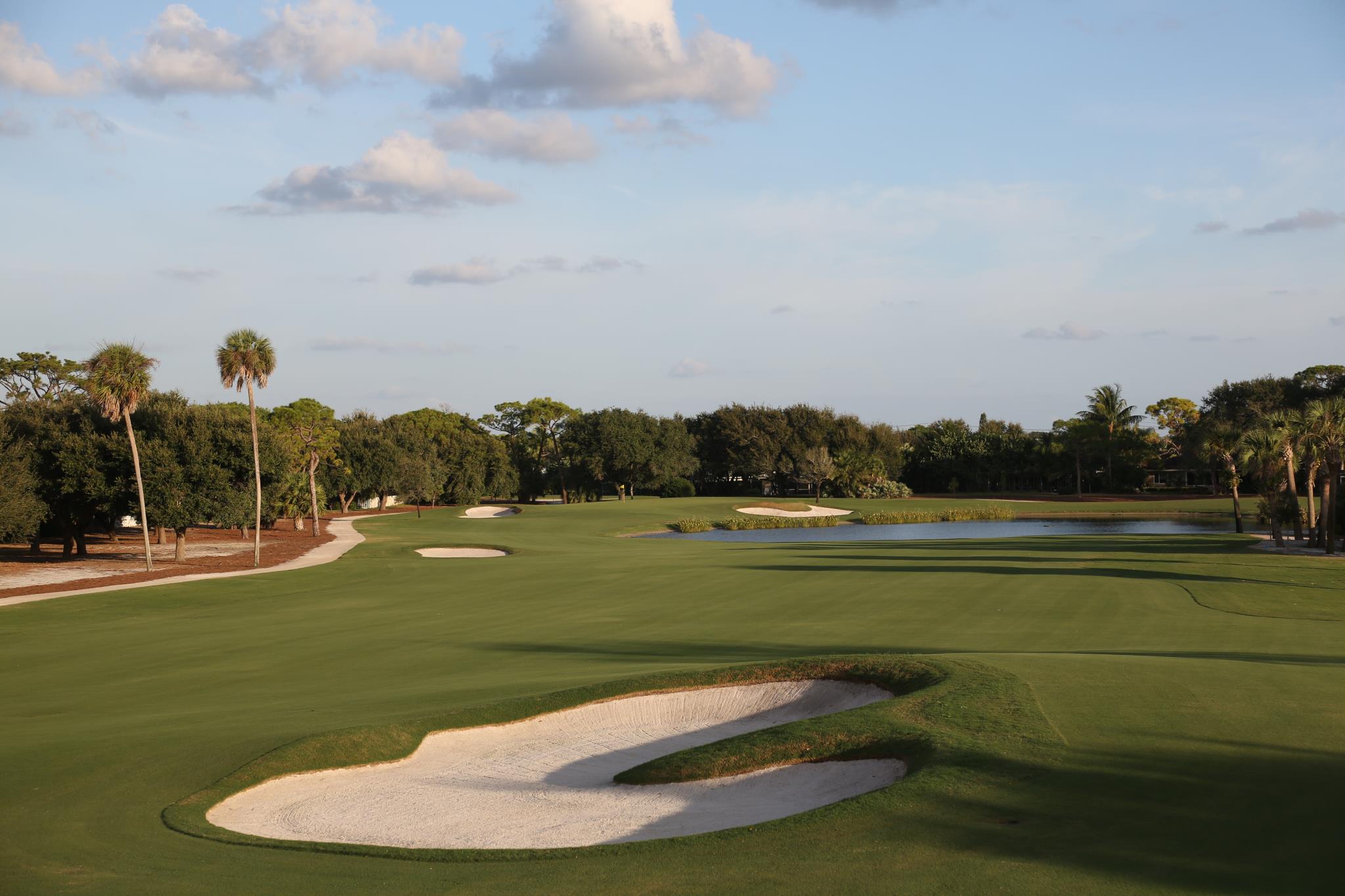
Tequesta Country Club · Tequesta
The dream was easy to imagine. Winter mornings on a beautiful golf course, afternoons around the pool, tennis and pickleball with friends, and evenings at the club grill where the children could find their own circle while the adults enjoyed theirs. For a family relocating from Chicago, South Florida offered the promise of an entirely different rhythm of life. All they needed was to find the perfect club community and the home where it would all come together.
Or so they thought.
Over the next two seasons, their search would take them through some of the most celebrated private clubs in Jupiter, Tequesta, Hobe Sound, and Stuart. They would play remarkable courses, discover distinct club cultures, and learn that the most impressive facilities didn’t always create the strongest sense of belonging.
But the biggest surprise wasn’t which club they ultimately chose. It was where they decided to live.
Tucked beneath a canopy of magnificent oak trees, Heritage Oaks offered something they hadn’t originally known to look for. Winding streets, generous homesites, and an understated Southern charm gave the neighborhood a warmth and character all its own. It felt rooted in tradition, with a quiet sense of continuity from one street to the next. They could picture their family putting down roots there.
Along the way, an important distinction began to emerge. The clubs with the most celebrated golf weren’t always the places where the whole family felt most at home. And the clubs with the strongest family atmosphere didn’t necessarily offer everything a passionate golfer wanted.
Another distinction became increasingly important. Some clubs required owning property within the community, while others offered membership independent of where you lived. What initially seemed like a small membership detail opened an entirely different way of thinking about their future. Perhaps the best neighborhood, the best family club, and the best golf experience didn’t all have to exist in the same place.
And that is exactly the direction their journey took. Heritage Oaks offered the neighborhood setting they loved, along with its own racquet courts and programs that made recreation part of everyday life. Just down the road, Tequesta Country Club gave them the feel of a neighborhood club, with a course everyone in the family could enjoy, whatever their skill level, and a place to meet friends and share a meal after a round. They left open the possibility of joining a more golf-focused club in the future. Three different elements, each chosen for what it did best, came together to create a club lifestyle uniquely suited to their family.
Meanwhile, another family dream was taking shape nearly two thousand miles away. Their children loved spending summers in Idaho and imagined a larger home there, a place where everyone could gather for years to come. Suddenly, the idea of building or buying the ultimate Florida residence began to feel less essential. Maybe Florida was about golf, friendships, sunshine, and an active everyday life, while Idaho would become the family’s larger gathering place.
That realization changed what the right Florida home looked like.
Instead of searching for an expansive, fully realized family estate, they began seeing the appeal of a charming residence on a beautiful, generously sized lot. A home that could be thoughtfully remodeled and enjoyed now, without committing them to a permanent vision of tomorrow. The right property could also preserve options for a future guesthouse, a new custom home, or an eventual move as their family’s needs evolved.
They ultimately purchased a home in Heritage Oaks, where the setting, neighborhood amenities, and proximity to Tequesta complemented the club lifestyle they had chosen. There was an investment lesson in that decision, too. A home’s finishes can be changed, but its location, lot, and surrounding neighborhood are far more difficult to recreate. A thoughtful renovation improves everyday living while respecting the character of the property and the market around it.
Looking back, the family discovered that the life they wanted in Florida called for a neighborhood that felt like home, a club where everyone belonged, the freedom to pursue exceptional golf, and a property that allowed their next chapter to unfold.
They came searching for the ultimate golf community. What they found was something more personal: a club lifestyle built around their family, rather than a family fitting its life around one club.
Local Perspective
Where the Fairways Meet the Florida Lifestyle
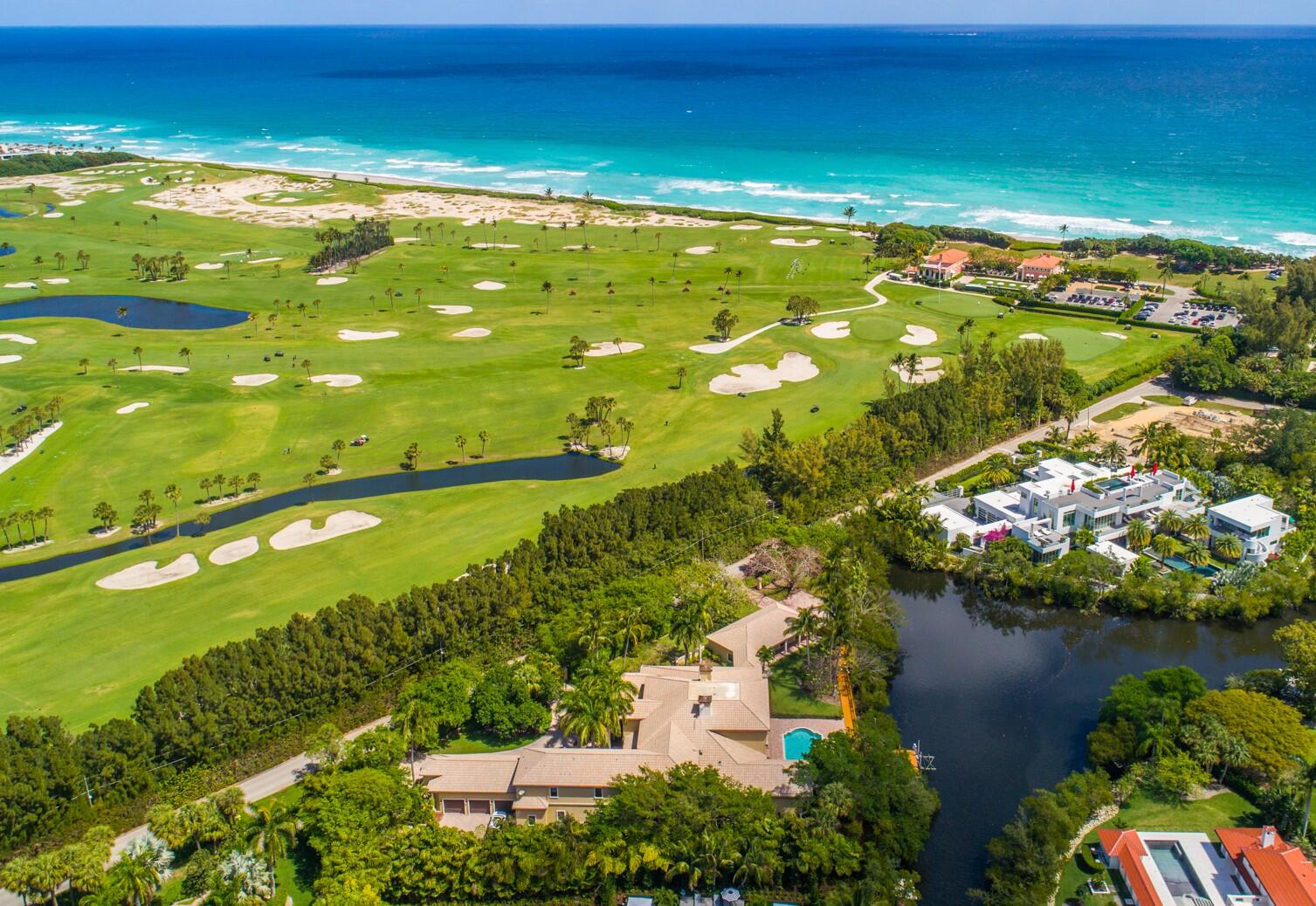
Seminole Golf Club · Juno Beach
There is something special about a winter morning in the Northern Palm Beaches. The air is cool enough to leave the windows open, the sun is just beginning to warm the fairways, and somewhere between the first tee and the morning coffee, the pace of life begins to feel a little different. By afternoon, that same day might take you from the golf course to a boat on the Intracoastal, a walk along the beach, or an outdoor table overlooking the water.
Stretching roughly 30 miles from Palm Beach Gardens to Stuart is one of the country’s great concentrations of private golf. Palm Beach Gardens and North Palm Beach bring Old Palm, BallenIsles, Frenchman’s Creek, and Lost Tree, with Seminole just up the coast in Juno Beach. Jupiter adds Admirals Cove, Jonathan’s Landing, and The Bear’s Club. Tequesta is home to Tequesta Country Club and Jupiter Hills, Hobe Sound to Medalist and McArthur, and farther north, The Floridian and Sailfish Point complete a remarkable collection, with dozens more clubs in between.
Many of them carry the fingerprints of golf’s greatest names. Seminole, laid out by Donald Ross on the Juno Beach dunes in 1929, is still considered one of his masterpieces. Jack Nicklaus built The Bear’s Club as his own home club, while Nick Price calls McArthur home and Raymond Floyd, Old Palm. Medalist, co-designed by Pete Dye and Greg Norman in 1995, has long counted more than 20 touring professionals among its members.
Yet what makes this stretch of coast so special isn’t simply the pedigree of its courses. It’s the variety of settings and lives that surround them.
Along the coast, clubs embrace the Atlantic and the Intracoastal, where ocean breezes, boating, and waterfront dining are as much a part of the day as golf. At Sailfish Point, life is shaped by the meeting of ocean, inlet, and river. In Jupiter, Admirals Cove pairs its golf with a marina and a true boating culture, while Frenchman’s Creek brings its own blend of club life and Intracoastal access farther south.
Move inland, and the atmosphere changes. Palm Beach Gardens offers beautifully kept club communities surrounded by the restaurants, shopping, and healthcare that make year-round living easy. Farther north, the land itself becomes the story. Jupiter Hills, founded at the end of the 1960s by architect George Fazio with partners including Bob Hope, was routed along a natural sand ridge that ranks among the highest ground in South Florida, with elevation changes of as much as 60 feet. It is golf most people never expect to find in Florida.
And two clubs with equally impressive facilities can feel entirely different. The people, traditions, junior programs, and plans for the future all shape what membership means over time. A beautiful course may catch your eye, but the friendships and sense of belonging usually decide whether a club truly feels right.
The golf may bring you here. But it’s everything surrounding the game that makes you want to stay.
Through the Lens
The Price of Belonging
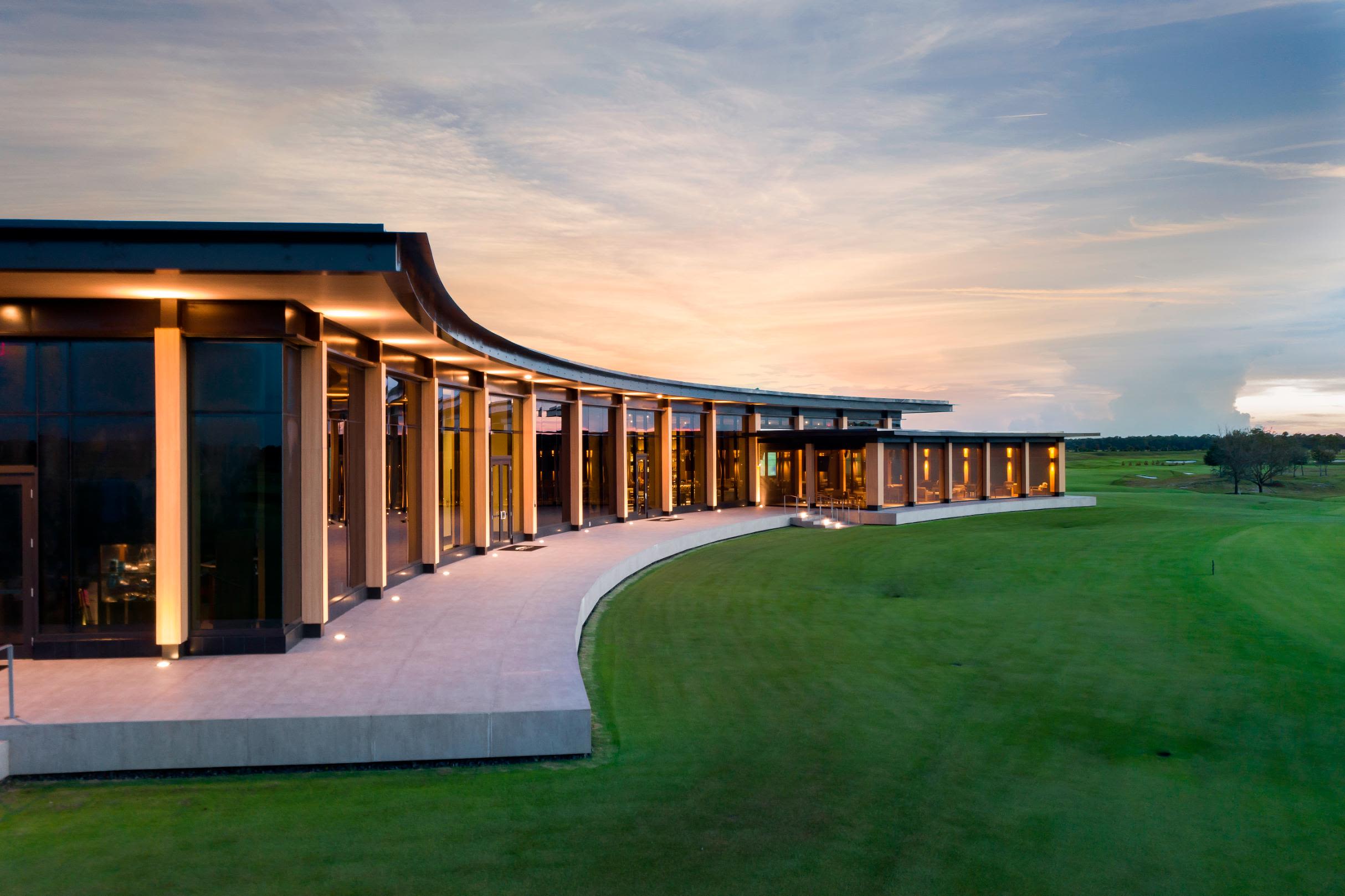
Grove XXIII · Hobe Sound
Most buyers compare homes down to the square foot, yet compare clubs on a single number: the initiation fee. In reality, the cost of belonging is made of several parts, and how they fit together says as much about a club as its golf course.
Understanding those parts, and the kind of club life you actually want, is what turns an expensive decision into a confident one.
What kind of club life do you want?
For the passionate golfer, it’s course design, practice facilities, and tee-time access. For the racquet player, court quality and competitive programs. Other families value dining, fitness, pools, and the occasional round, and some want golf, boating, racquets, and wellness all within the same gates. Clubs reflect those priorities in their membership categories: Full Golf offers the broadest access, Sports pairs racquets and fitness with more limited golf, and Racquet and Social memberships center on the courts, the pool, and the dining room. Names and privileges vary from club to club, so the real question is how you’ll actually use it.
Find Your Club Lifestyle
Golf First
Course, practice, and a serious playing culture come first.
Seminole · Jupiter Hills · Medalist · Apogee · The Bear’s Club
Golf + Racquets + Family
Golf alongside tennis, pickleball, fitness, and programming for every generation.
Jonathan’s Landing · Tequesta Country Club · PGA National
Golf + Marina
Boating culture and golf within the same gates.
Admirals Cove · Frenchman’s Creek · Sailfish Point
Complete Residential Club Living
Homeownership includes a club membership requirement. Available categories and privileges vary by club.
Mirasol · Frenchman’s Reserve · BallenIsles
Examples are illustrative. Membership categories, availability, and terms vary by club and change often.
What does belonging cost?
Published 2026 schedules show just how wide the range is. Full golf initiation fees across our corridor generally fall into three tiers, from established clubs where full golf comes in at $250,000 or less to the most sought-after addresses beyond $450,000. Annual dues for full golf commonly run from about $20,000 to more than $50,000, and capital dues, assessments, and dining minimums can add meaningfully to that. Social, racquet, and sports categories typically enter well below full golf. The home itself is a separate consideration.
Initiation Fee Ranges
Full Golf Initiation
$250K and Below
Established country clubs and newer offerings where full golf comes without a top-tier buy-in.
Jupiter Country Club · Jonathan’s Landing · PGA National · Triple Stick
Full Golf Initiation
$250K–$450K
Many of the area’s most established equity clubs, often with membership tied to the home.
BallenIsles · Old Palm · The Loxahatchee Club · Frenchman’s Reserve
Full Golf Initiation
$450K and Above
The top of the market, where golf, privacy, and amenities reach their fullest expression.
Admirals Cove · Apogee · Panther National · Trump National Jupiter
Tiers reflect published or reported full golf initiation fees for 2025–2026. Many clubs do not publish fees, and all are subject to change. Contact us for current figures on any club.
Where to play while you wait: Abacoa, The Park, North Palm Beach Country Club and Sandhill Crane all offer quality public golf, a good fit for racquet and social members who play occasionally and for buyers waiting on a full golf membership.
Equity, non-equity, and what you actually own
How a club is owned matters as much as what it costs. In an equity club, the members collectively own the club, and part of what you pay at joining is an equity contribution, a portion of which may be returned when your membership is eventually resold, on the club’s terms and often after a waiting list. At BallenIsles, for example, the full golf joining fee combines an equity contribution with a non-refundable initiation fee. In a non-equity club, a developer or operator owns the club; joining fees are typically non-refundable, and members have less say in capital decisions, but also less exposure to them.
Beyond the structure, ask what’s included, whether there are seasonal restrictions or dining minimums, which projects are planned, and how they’ll be funded, whether through reserves, dues, or assessments. In communities with mandatory membership, a future buyer will weigh the home and the club obligations together, so those answers shape resale as well as everyday life.
The value of belonging is what membership adds to your life, and the freedom it leaves you to shape what comes next.
Discovery
A New Golden Age of Club Living
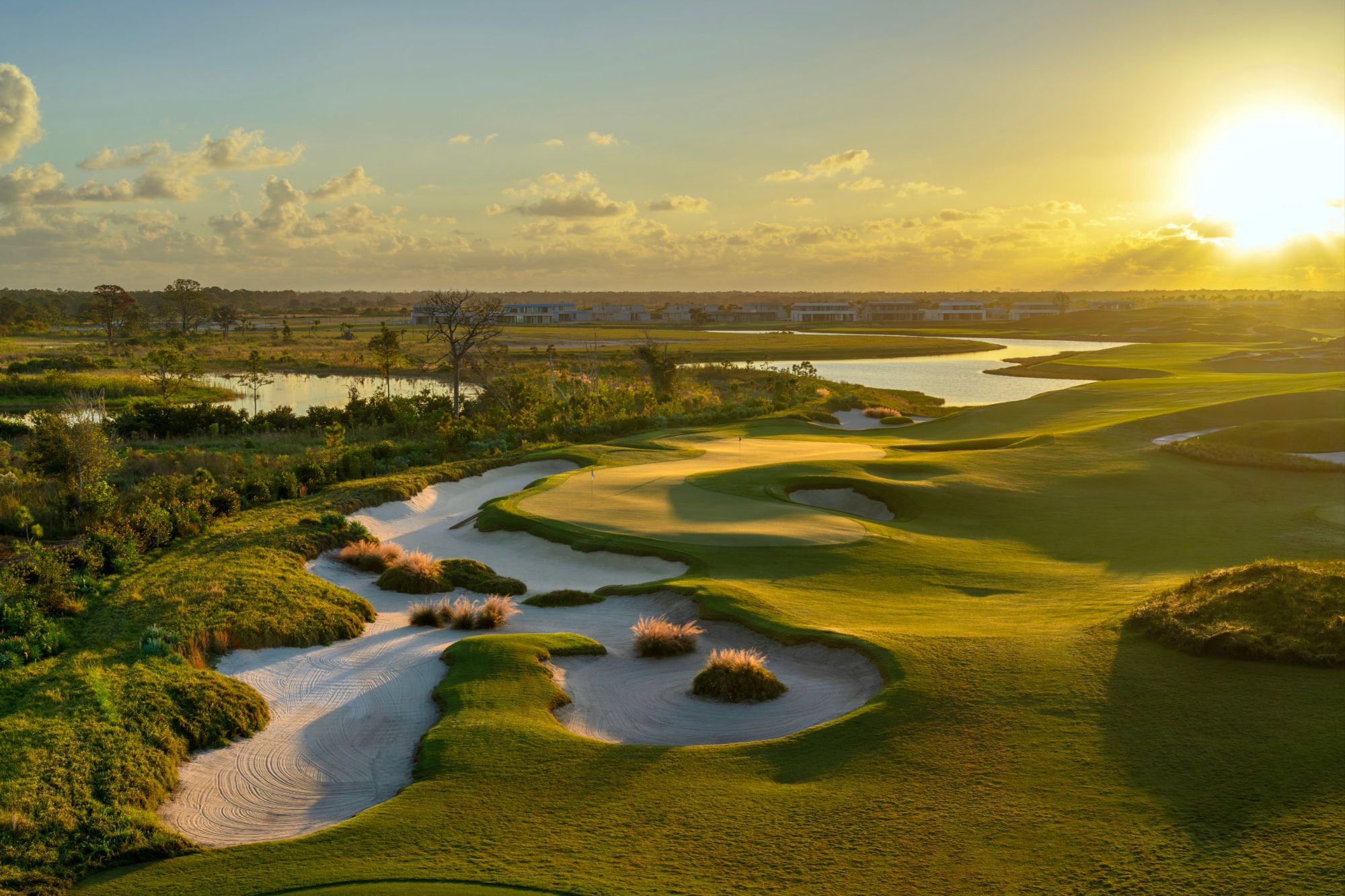
Panther National · Palm Beach Gardens
Not long ago, the measure of a great private club was fairly simple: a beautifully maintained golf course, an established membership, a welcoming clubhouse, and perhaps a few tennis courts and a pool. For generations, that formula served South Florida’s most celebrated clubs remarkably well.
Then the world changed, and so did the expectations of the people arriving here. Families who once visited for a few winter weeks began staying the entire season or making it home. A new generation of members arrived wanting exceptional golf, and also a place their spouses, children, and friends would love: great racquet programs, wellness, outdoor dining that feels like a favorite restaurant, and a social life that makes the club part of every day.
The clubs have answered with some of the most ambitious work the region has seen. Panther National opened in Palm Beach Gardens in late 2023 as the county’s first new private golf community in about two decades, pairing a Jack Nicklaus and Justin Thomas course with 218 custom estates. Jonathan’s Landing has reimagined all three of its courses, beginning with a Hanse Golf Design rework of its Match Course and most recently the Village Course with Beau Welling Design. Old Palm’s clubhouse renovation was named Golf Inc.’s 2024 Clubhouse of the Year, BallenIsles earned national recognition in the 2026 Golf Inc. Awards for its multi-amenity work, and Mirasol broke ground on a 41,000-square-foot building for golf operations and casual dining, with an indoor pickleball venue also in its plans.
Even the way members play is changing. Nine-hole rounds posted to the USGA set a record for the fifth straight year in 2025, up more than 46% since 2020, a sign of how many golfers now fit the game around full lives rather than the other way around. New clubs are building for it: Panther National pairs its championship course with a nine-hole par-3 course and extensive practice facilities.
What’s especially interesting is that the changes haven’t produced one model of the modern club. Some have doubled down on the golf itself: architecture, conditioning, and a serious playing culture. Others have become complete lifestyle destinations, where golf shares the spotlight with racquets, wellness, dining, and family recreation. The outdoor grill has become a gathering place, the pickleball courts have created new circles of friends, and children who once visited the club for a holiday party now have reasons to be there all week.
For buyers and prospective members, that makes a club’s direction as important as its current facilities. A club investing heavily in its golf may suit a very different family than one building a broader social experience. Neither is better. What matters is whether the club’s vision matches the life you want to lead.
Places Worth Knowing
The Club Community & The Golfer’s Club

Jonathan’s Landing · Jupiter
Not all club living is the same. Two families can both say they want “a golf community” and mean entirely different things.

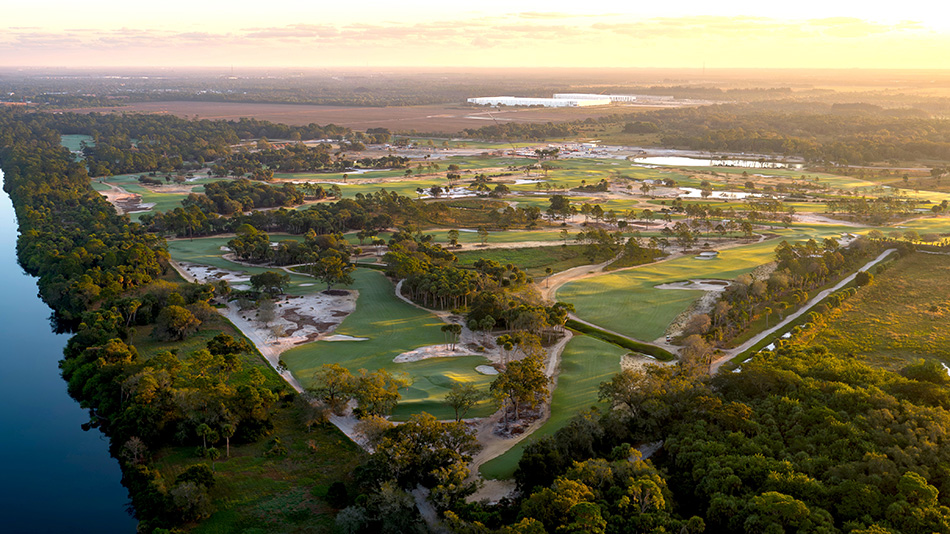
Jonathan’s Landing
Some families want a club that fills the whole week. Golf in the morning, tennis or pickleball in the afternoon, the fitness center and spa, dinner with friends, and a calendar of events for every generation. Jonathan’s Landing, a member-owned club in Jupiter, has built exactly that kind of life around three championship courses on two properties: the Village Course near the Intracoastal, and the Match and Medal courses at Old Trail, set within natural preserve land in Jupiter Farms.
Why it’s different
Three courses with three distinct personalities, from the reimagined Village Course, where reaching the 17th fairway calls for a short ferry ride, to the Tom Fazio–designed Medal at Old Trail. Add 10 Har-Tru tennis courts, six pickleball courts, and a wellness center and spa, and few clubs serve both the committed player and the whole family as completely.
Apogee
Others want something more focused: a club where golf is the entire point. Apogee, which opened in Hobe Sound in December 2023, is built entirely around that idea. Its roughly 1,200 acres of preserved natural land hold no homes at all, just three championship courses, a clubhouse, and private villas reserved for members, their families, and invited guests. It’s built as much for the member who flies in for a week of golf as for the one who lives down the road, and it now draws members from around the world.
Why it’s different
Five of the game’s most respected designers shaped its three courses: Gil Hanse and Jim Wagner, Kyle Phillips, Tom Fazio II, and Mike Davis. Each course has its own personality, and Phillips’s returns to the clubhouse after the 12th hole, so a round can be six, twelve, or eighteen holes. With no real estate attached, membership is the entire relationship and where you live is a separate decision, much like the family in this month’s feature story.
What We’re Watching
Triple Stick, Tequesta Country Club, the Cognizant Classic & Record Rounds
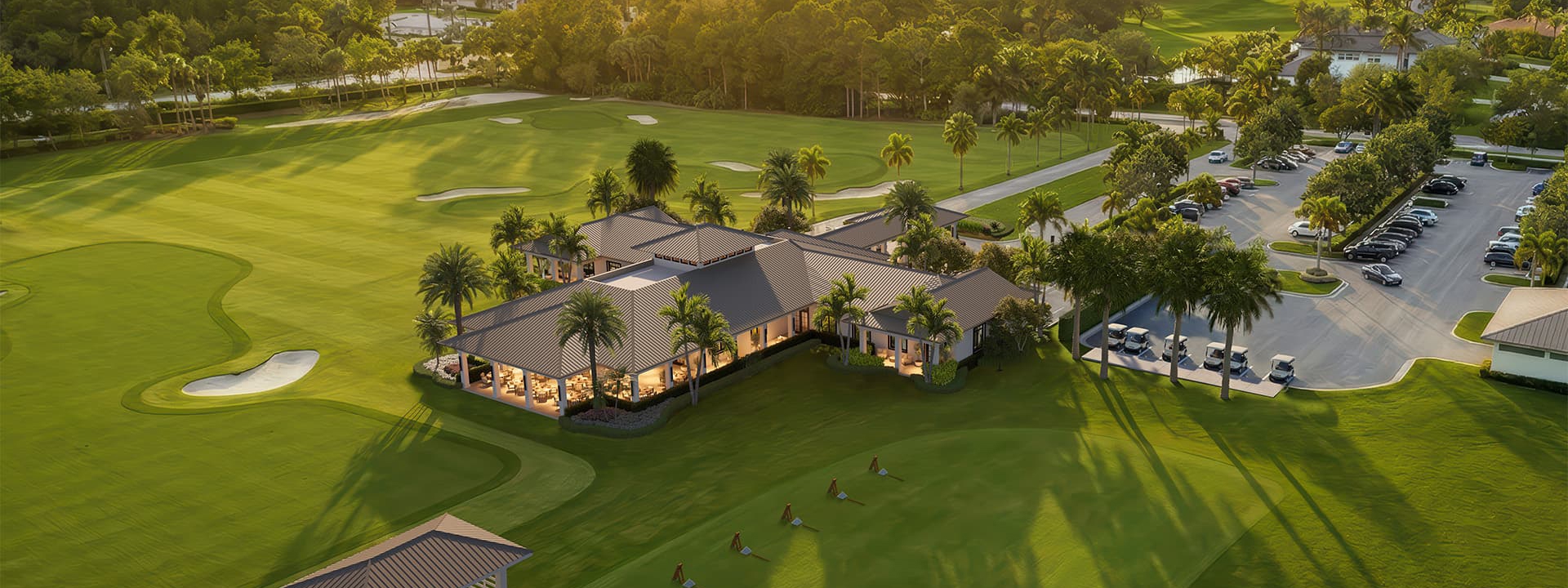
Triple Stick Golf Club · Palm Beach Gardens (rendering)
A New Members-Only Club at PGA National
Following the routing of the former Estates Course within Bay Hill Estates, Triple Stick Golf Club is a Dye-inspired design from Davis Love III’s Love Golf Design, with an intimate clubhouse by Peacock + Lewis to follow the course. The course opens this season.
Founding membership is private and intentionally limited, with a joining fee in our corridor’s most accessible tier, and it also opens PGA National’s full collection of courses, racquets, fitness, and spa.
Why it matters
New private golf is rare in Palm Beach Gardens. And because club membership is optional in Bay Hill Estates, the house and the club remain two separate decisions.
Tequesta Country Club Begins Its Next Chapter
In February, the Village of Tequesta approved a new 24,232-square-foot, coastal-inspired clubhouse to replace the club’s original 1957 building, along with a new cart barn, landscaping, and improved circulation. Major construction is consolidated into a single window expected to run through roughly August 2027.
We’re watching because the club is welcoming new members during the rebuild, an unusual chance to join a beloved neighborhood club on the eve of its next era.
The PGA TOUR Returns to Palm Beach Gardens
The Cognizant Classic in The Palm Beaches returns to PGA National’s Champion Course February 24–28, 2027, with tournament rounds February 25–28, opening the TOUR’s Florida Swing.
Tournament week is a reminder of why so many golfers choose to live here. The same courses, clubs, and winter weather that draw the world’s best players are part of everyday life for the people who call the Palm Beaches home.
Golf Has Never Been Busier
U.S. courses hosted a record number of rounds in 2025, the fourth record in five years, and did it with roughly 2,000 fewer facilities than existed at the game’s last participation peak two decades ago. The National Golf Foundation points to a modest rise in private-club play as part of what pushed the total over the top.
For a region with a largely fixed supply of private tee times, that demand shows up in waitlists, rising joining fees, and the wave of reinvestment described in this issue. It’s also why the timing of a club decision deserves as much thought as the choice of club itself.